 |
| Frosty Russia-Ukraine relations have hit goods traffic |

The Kiev government, supported by the EU and US, remains in a tense confrontation with Russia, accusing Moscow of supplying the rebels with heavy weapons and regular troops.
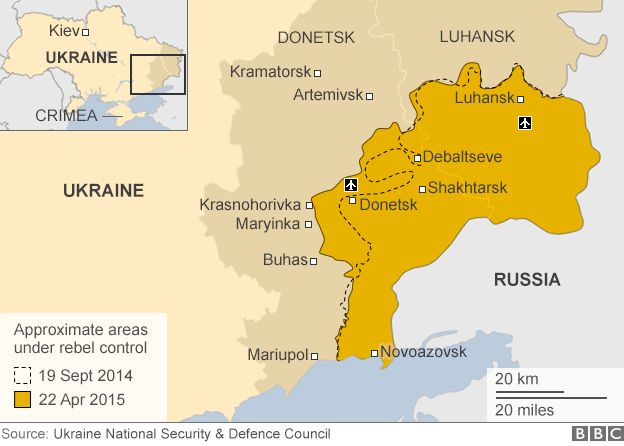
Moscow acknowledges only that Russian "volunteers" are helping the rebels. A fragile ceasefire is holding in the breakaway parts of Donetsk and Luhansk regions. Kiev no longer controls a long stretch of the border with Russia.
On 1 January a far-reaching trade partnership deal took effect between the EU and Ukraine
The deal angered Russia, which excluded Ukraine from preferential trade terms that it operates with some ex-Soviet neighbours.
Russian Prime Minister Dmitry Medvedev said the lorry blockade in Ukraine was "intolerable" and he warned that Russia could impose further restrictions on Ukrainian transport if Kiev failed to "restore order".
More than 500 returning Russian lorries are stranded at Ukraine's borders with EU countries, and more than 100 on roads inside Ukraine, Russia's transport ministry says.
Wider disruption
The Russian and Ukrainian governments have accused each other of flagrantly violating international trade rules.Western sanctions are already targeting Russia's energy, defence and banking sectors, as well as powerful individuals close to President Vladimir Putin.
Last September Ukrainian nationalists and Crimean Tatars launched a border blockade to prevent lorries delivering goods to Crimea. The Ukrainian peninsula was annexed by Russia in 2014 - a move condemned internationally.
Russia is also in a trade dispute with Poland, because an agreement on cargo traffic across their border expired on 1 February.
As many as 440 Russian and Belarusian lorries were stuck at Lithuanian border crossings on Sunday, Russia's Tass news agency reported. The lorries had to divert to Lithuania after Poland refused to let them in.
No comments:
Post a Comment