 |
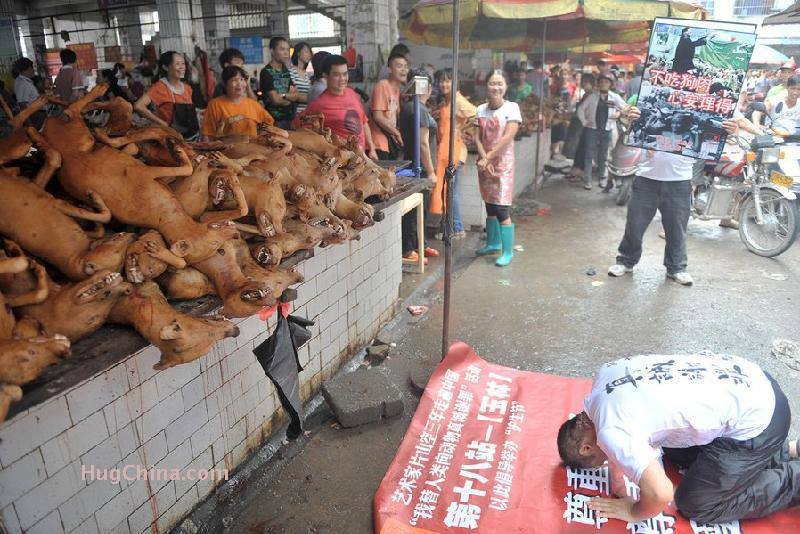
| Vendors cut butchered dogs at a dog meat market |
 |
| Dogs are piled high so vendors can sell their meat |
An annual dog meat festival has begun in southern China, amid widespread domestic and international opposition.
 |
| The festival sees people gather to have dog meat hotpot, fruit lychees and liquor |
 |
| Dogs in cages at Yulin Dog Meat Festival |
 |
| Dogs hanging up after being roasted |
 |
 |
| Dogs come from as far as 1,000 miles away and are sometimes denied food and water for days during their trip, activists say |
 |
| A man roasts dogs at a restaurant in Yulin |
 |
| Many people travel to Yulin from other cities to take part in the festival |
What is the festival about?
The Lychee and Dog Meat Festival sees people gathering in Yulin to sample dog meat hotpot, lychee fruits and local liquor. A tradition of eating dog meat dates back some 500 years in China, South Korea and other countries, where many believe it wards off the heat in summer months.
 |
| Roasted dogs are cut up ready for sale |
What happens to the animals?
Ahead of the festival, dogs are often kept in small, cramped cages. Some photographs show animals wearing collars, suggesting they may have been stolen pets. Many dogs are transported from other cities in cramped lorries and unsanitary conditions, allowing diseases to spread easily.
According to campaign group Stop Yulin Forever, dogs are denied food and water for days during their trip.
Does the festival have popular support?
A poll published this week in state media Xinhua showed that 64% of people aged 16 to 50 would support a permanent end to the festival. Another 51.%, including Yulin residents, wanted the dog meat trade banned completely, with 69.5% claiming to have never eaten dog meat.
"It's embarrassing to us that the world wrongly believes that the brutally cruel Yulin festival is part of Chinese culture," said Qin Xiaona, director of the Capital Animal Welfare Association charity, one of many groups that commissioned the survey. "It isn't."
Many activist groups, like Humane Society International (HSI) are also working to rescue dogs from local slaughterhouses. The HSI rescued 20 dogs from a slaughterhouse just a day ahead of the festival.
"It's shocking to think that if we had not been there, all these animals would have been beaten to death and eaten," said Peter Li, HSI's China policy specialist. On China's Sina Weibo social network, the majority of netizens have voiced disapproval, with one user saying his dog was "family, not food".
However, another Weibo user said it was hypocritical to say that eating other forms of meat such as pork was alright, yet shun dog meat just because dogs "were cute".
Have the protests had any impact?
The Yulin government has distanced itself from the gathering, saying that it does not officially organise the festival. This year, media reports say officials have banned the slaughter of dogs in public.In anticipation of protests, they have also increased security on streets near well-known restaurants and markets.
 |
| Some activists say there is little chance of a stop to the festival |
"The authorities seem nervous and are alerting government employees to stay away from the dog meat restaurants." Andrea Gung, founder of the Duo Duo project which aims to end the dog and cat meat trade, says the local government is aware of the problem, but no one wants to "stick their neck out" to stop it.
However, one dog meat seller said that the opposition to the festival had actually backfired. "Because of the protests, more people know that Yulin has a dog meat festival, so everyone comes and tries it," Lin told AFP.
No comments:
Post a Comment