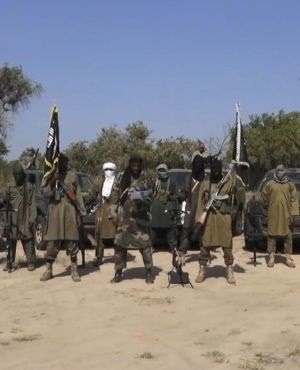
In a statement distributed late on Sunday, Nigerian army spokesman Colonel Sani Usman said the jihadists attacked as the troops were carrying out "clearance operations" in Boko Haram's fiefdom, Borno state, on Saturday.
"Five soldiers, three vigilantes and one civilian... lost their lives during the ambush, while 19 soldiers and 1 civilian," were injured, Usman said.
"The bodies of the late soldiers and civilians have been evacuated to Maiduguri, while the injured are receiving commensurate medical care and are in stable condition."
The Islamic State (ISIS) claimed the attack in a statement, saying it killed nine people in the southern part of Borno state.
Suicide bombings
Boko Haram aligned with ISIS in March 2015, yet there are signs that the Islamist group has since split into rival factions. The ongoing attacks highlight how Boko Haram remains a threat in the ravaged region, which is facing a humanitarian crisis as a result of the seven-year insurgency.
Since Boko Haram jihadists took up arms against the Nigerian government in 2009, over 20 000 people have been killed with some 2.6 million displaced from their homes.
Today, people in Nigeria's northeast are suffering famine-like conditions, which Unicef says could kill tens of thousands of children if they do not receive aid soon.
While Nigerian forces have reclaimed swathes of territory from the insurgents, Boko Haram is still active in the country. On Saturday, two suicide bombings rocked the Borno state capital of Maiduguri, killing at least nine people.
One of the explosions went off near the Bakassi camp for internally displaced persons, one of several camps set up around Maiduguri for the masses of people who have come seeking shelter and food.
Human Rights Watch on Monday accused Nigerian officials of sexually exploiting women and girls living in the camps, reporting that women had been abused by soldiers, camp administrators and the police. The Nigerian government has yet to respond to the claims.