 |
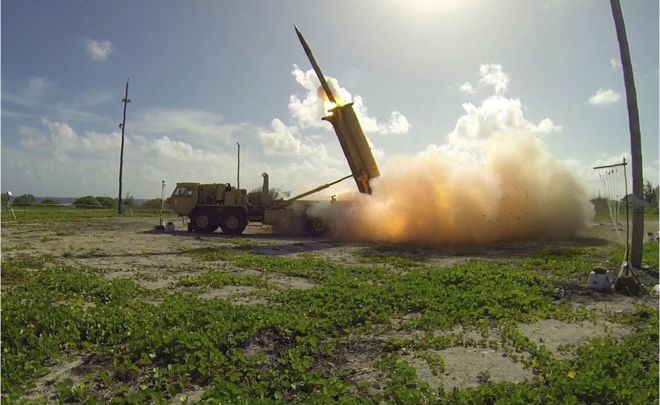
| The Thaad system, seen here in a file photo, is designed to take out North Korean missiles |
The US military says its controversial Thaad missile defence system is "operational" in South Korea.
But officials have told reporters that full operational capability is still some months away.
 |
| Some people in South Korea have protested against the installation of the system |
 |
- North Korea crisis: Why now?
- How mixed signals could spell disaster
- Are N Korea's neighbours worried?
Thaad, which stands for Terminal High Altitude Area Defence, was installed last week at a former golf course in the central county of Seongju, amid angry protests.
Many locals believe the system is a potential target for attacks and endangers the lives of those living nearby. China has also protested - it believes the system's radar range could interfere with the security of its own military operations.
A spokesman for the US forces based in South Korea said Thaad was now "operational and has the ability to intercept North Korean missiles and defend the Republic of Korea".
But a US defence official told AFP news agency that the system currently only has "initial intercept capability" which would be beefed up later this year as more parts of the system arrive.
North Korea and the US have traded heated rhetoric in recent weeks as Pyongyang continues to defy a UN ban on missile tests.
It has carried out two failed missile launches in recent weeks and has said it is ready to carry out its sixth nuclear test at any time.
What is the Terminal High Altitude Area Defense System (Thaad)?
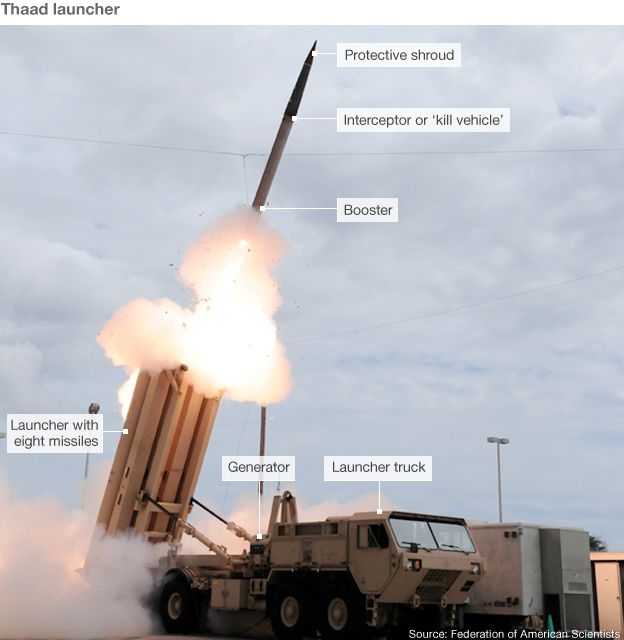
- Shoots down short and medium-range ballistic missiles in the terminal phase of their flight
- Uses hit-to-kill technology - where kinetic energy destroys the incoming warhead
- Has a range of 200km and can reach an altitude of 150km
- US has previously deployed it in Guam and Hawaii as a measure against potential attacks from North Korea
What impact will S Korea's expanded missile defence system have?
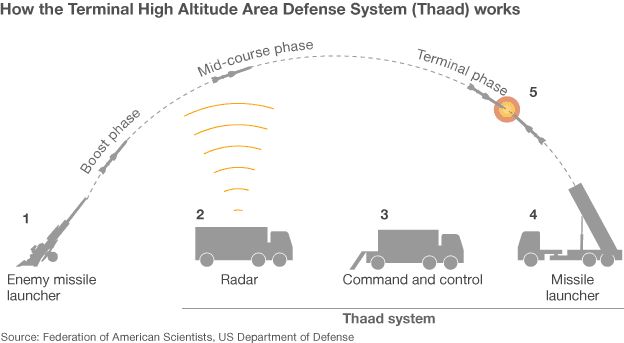
1. The enemy launches a missile
2. The Thaad radar system detects the launch, which is relayed to command and control
3. Thaad command and control instructs the launch of an interceptor missile
4. The interceptor missile is fired at the enemy projectile
5. The enemy projectile is destroyed in the terminal phase of flight
 |