 |
A host of internet giants - from
social networks to dating apps to porn sites - will join a protest
Wednesday against plans to roll back rules protecting "net neutrality".
 |
| Google will be among those protesting |
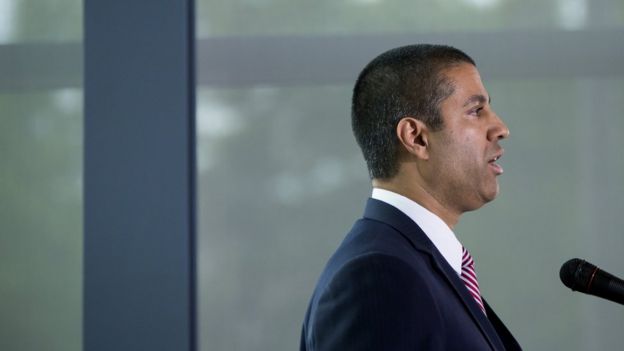 |
| FCC Chairman Ajit Pai has proposed reversing net neutrality rules for internet service providers |
Crowdfunding site Kickstarter will be involved, as will craft-selling site Etsy and dating app OkCupid. PornHub, one of the world's most visited sites, will also be taking part.
"Internet service providers could create special fast lanes for content providers willing to pay more," said Corey Price, vice president of PornHub. "That means slow streaming, which, especially in regards to online porn, is quite problematic as you can imagine."
Campaigners told the BBC around 80,000 websites and services in all are taking part in the co-ordinated action that is designed to draw attention to a public consultation about the proposed rule reversal.
"What we want the FCC to hear, and we want members of Congress to hear, is that net neutrality is wildly popular, which it is, and we want them to stop trying to murder it," said Sean Vitka, a lawyer for pro-net neutrality groups Demand Progress and Fight for the Future.
"It stops large companies, like internet service providers, from controlling who wins or loses on the internet. There'd be nothing to stop your ISP stopping the next Facebook, the next Google, from accessing customer's equally.
"If a new company can't access companies on the same terms as the incumbent's they're not going to have the chance to thrive."