 |
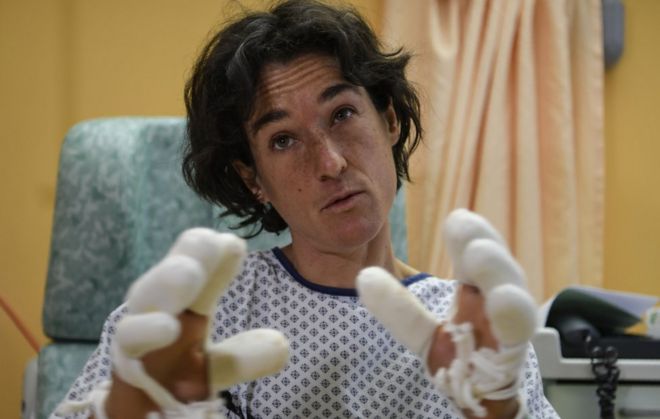
| Ms Revol has described the decision to abandon her climbing partner as "terrible and painful" |
A French mountaineer has described
how she was forced to abandon her weak and ailing climbing partner in
order to be rescued from one of Pakistan's most deadly Himalayan
mountains.
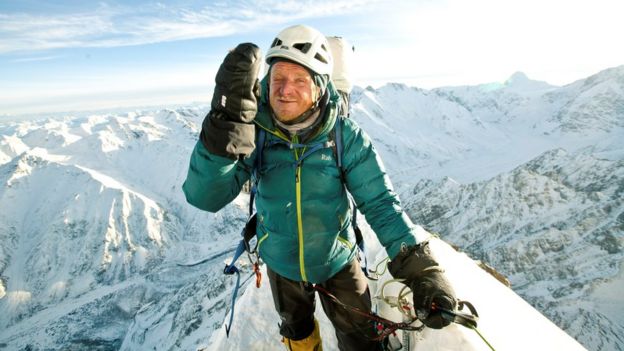 |
| Rescuers could not reach Polish climber Tomasz Mackiewicz |
Rescuers could not reach Mr Mackiewicz and it is thought unlikely he could have survived. Among her recollections, Ms Revol said that altitude-induced hallucinations had caused her to take a shoe off in freezing conditions.
'Blood streaming from mouth'
The pair began climbing on 20 January, and within a few days were approaching the summit. But shortly after they reached the peak of the 8,120m (26,640ft) mountain, Mr Mackiewicz complained that he could not see.Ms Revol told AFP: "He hadn't used a mask because it was a bit hazy during the day and by nightfall he had ophthalmia [an inflammation of the eye]."
He then clung to her shoulders as they began the difficult descent in darkness. Mr Mackiewicz, she said, began to have trouble breathing.
"He took off the protection he had in front of his mouth and he began to freeze. His nose became white and then his hands, his feet."
They huddled overnight in a crevasse but his condition deteriorated further with "blood streaming from his mouth" - a sign of a build up of fluid in the body, the ultimate stage of acute altitude sickness.
He then clung to her shoulders as they began the difficult descent in darkness. Mr Mackiewicz, she said, began to have trouble breathing.
"He took off the protection he had in front of his mouth and he began to freeze. His nose became white and then his hands, his feet."
They huddled overnight in a crevasse but his condition deteriorated further with "blood streaming from his mouth" - a sign of a build up of fluid in the body, the ultimate stage of acute altitude sickness.