Pages

Tuesday, 27 March 2018

Linda Brown, centre of Brown v Board civil rights case, dies

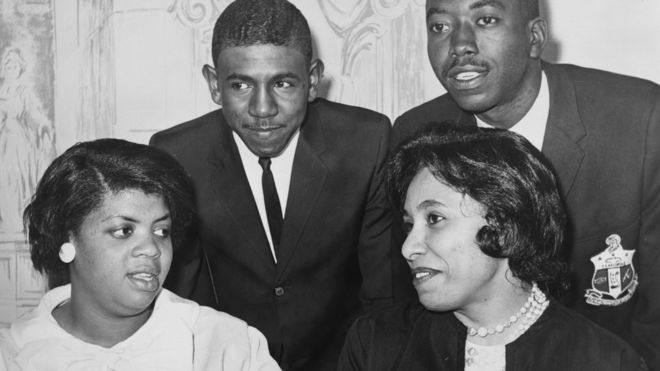
Linda Brown Smith (1st from left), Ethel Louise Belton Brown, Harry Briggs, Jr., and Spottswood Bolling, Jr. during press conference at Hotel Americana
Four of the child plaintiffs in the case, including Linda Brown (left) pictured on 10th anniversary in 1964
Linda Brown, whose attempt to enrol in an all-white school led to a landmark US civil rights ruling, has died at 76.
As an African-American child, Ms Brown was barred from attending an elementary school in Topeka, Kansas in 1951.
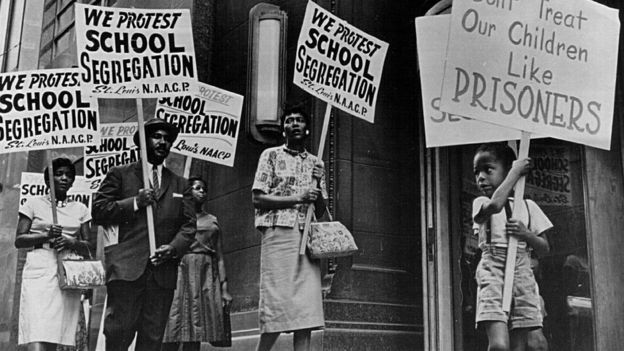
Protestors in 1964 picket continued segregation
The 1954 ruling, in Ms Brown's name, is considered a landmark moment for the US civil rights movement
Her father became the lead plaintiff in a case by families that argued that the idea of "separate but equal" violated African-American civil rights.

The 1954 Brown vs. Board of Education Supreme Court ruling struck down legal segregation in US schools.
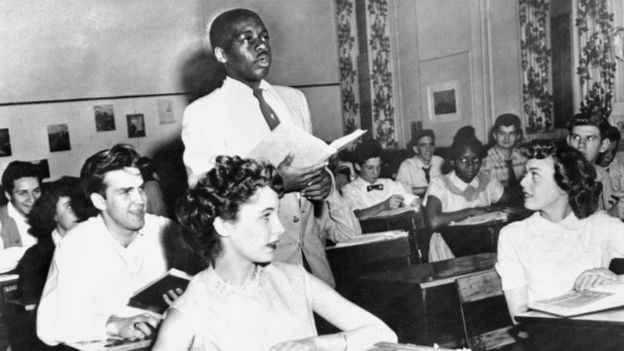
A black student stands in a high school at school in Washington in 1954 following the ruling
The ruling led to some schools desegregating that year, including the Saint-Dominique school, in Washington (pictured)
Despite living just a few streets away from Sumner Elementary School, Linda was turned away and told to enrol in African-American school, two miles away. As a nine-year-old, it meant crossing train tracks and getting a bus alone.

Her father, Oliver Brown, became one of 13 plaintiffs to bring a lawsuit against the Topeka Board of Education.
The case was initially struck down, but he later joined a national legal challenge by the National Association for the Advancement of Coloured People (NAACP) on behalf of families from several states.

They hoped to overturn the 1896 Plessy v. Ferguson ruling which legally sanctioned the idea of racially segregated facilities. Civil rights activists argued that it was discriminatory because African-American schools often had poorer facilities.