 |
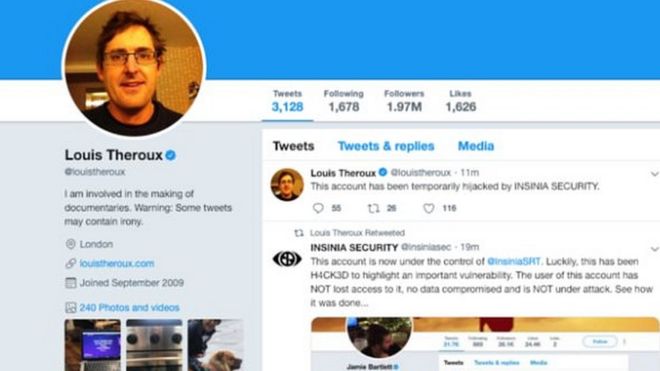
| BBC documentary-maker Louis Theroux was among those targeted |
Several high-profile Twitter accounts have been briefly hijacked to expose alleged flaws in the service.
In a blog, the firm said it managed the feat by analysing the way Twitter handles messages posted by phone.
Knowing a person's phone number could let attackers send messages from accounts they do not control, it said.
 |
| Messages appeared on Mr Holmes Twitter account that he did not send |
Insinia said it had repeatedly warned about the problem in the past. But it has faced criticism for its latest attempt to publicise the issue.
Mr Calder confirmed to the BBC that the attack had been done without his permission and described it as a "tedious" and "annoying" experience that had left him feeling unimpressed.
One cyber-security expert said it would be normal practice for researchers to carry out such a "proof of concept" by hacking their own accounts or those of co-operating volunteers, not unaware members of the public.
"Interfering with many people's accounts in this way is irresponsible," said Prof Alan Woodward from the University of Surrey.
"As frustrating as it might be for the researchers in question when Twitter maintain this functionality that can be abused, unauthorised interference with accounts is unacceptable."
Another expert added that such action could be a breach of the Computer Misuse Act. Professor Peter Sommer from Birmingham City University said some cyber-security professionals had lobbied to allow unauthorised access in special circumstances, for example to improve security," said Peter Sommer from Birmingham City University.
"But at the moment the only exceptions are for the police and intelligence agencies." Mike Godfrey, chief executive of Insinia, said his firm had only "passive interaction" with the Twitter accounts it targeted and denied it had broken the law.
"Nothing has been maliciously hacked," he told the BBC. "We have not had access to any Twitter account and have not seen any of their direct messages.
"There's nothing unethical or irresponsible about what we did."
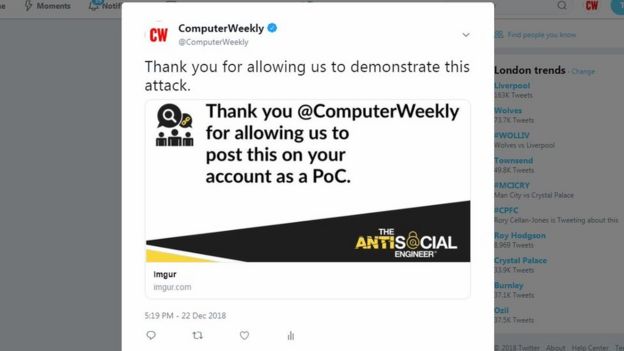
Another cyber-security company that discussed the same Twitter vulnerability earlier this month noted that when it hijacked Computer Weekly's Twitter account it did so with the magazine's permission.